
Contact Us
As artificial intelligence reshapes the global technology landscape, engineering institutions are rethinking how they prepare students for an AI-driven workforce. From curriculum transformation to industry collaboration, the focus is shifting toward developing graduates who can apply AI to solve real-world challenges.
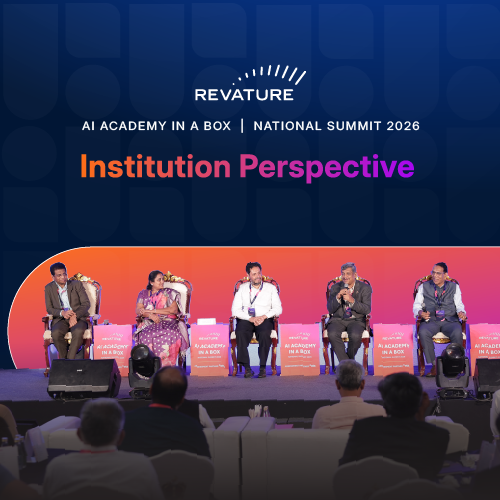
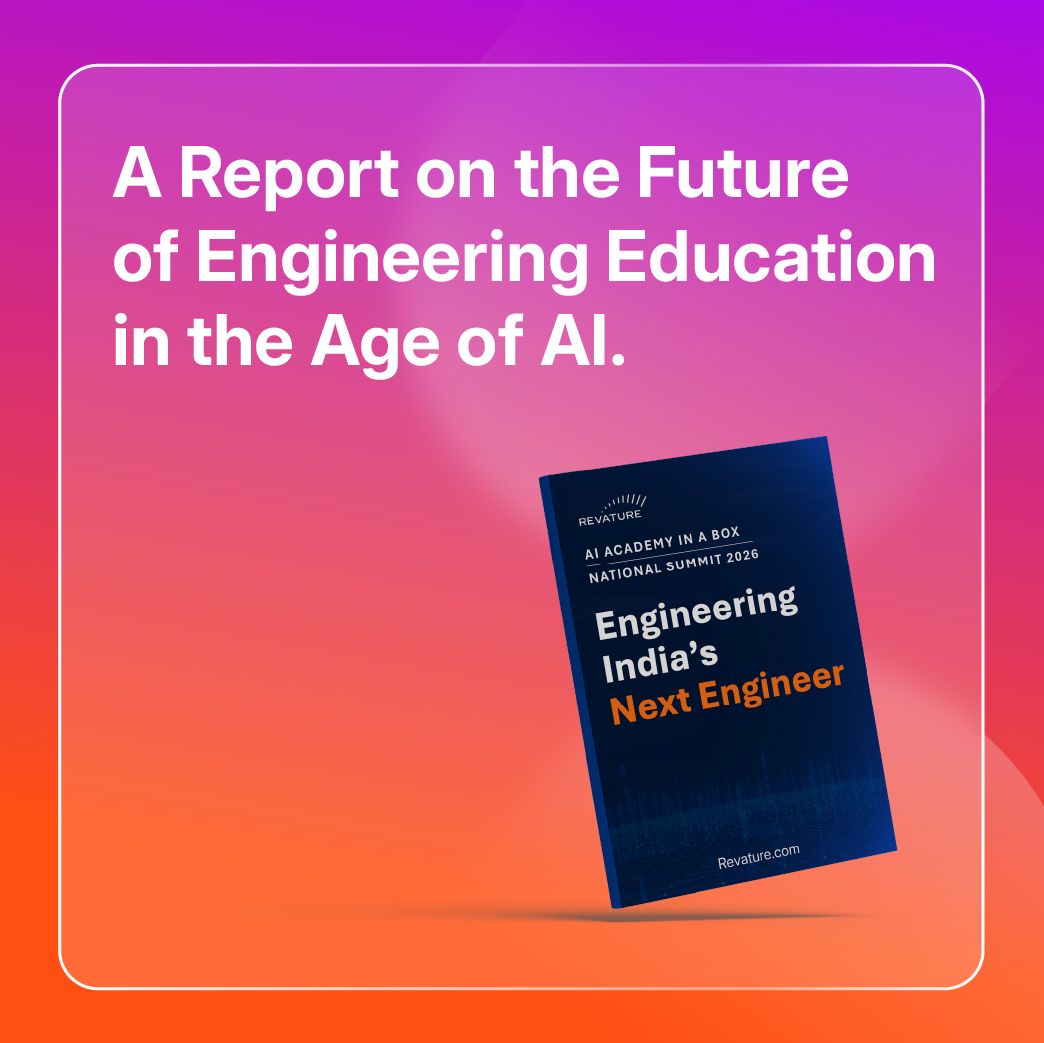
At Revature’s AI Academy in a Box National Summit 2026, held on August 4 in Chennai, academic leaders came together for an institutional perspective panel titled “How Educational Institutions Are Scaling Up for the AI Era.”
The discussion explored how universities are integrating AI into engineering education, strengthening faculty capabilities, and building industry-aligned learning environments.
Moderated by Narayanan Ramaswamy of KPMG India, the panel highlighted three priorities for the future of engineering education:
The discussion emphasized that AI adoption must extend beyond introducing new technologies into classrooms. Institutions must strengthen foundational engineering knowledge while creating opportunities for students to apply emerging technologies through practical projects and industry exposure.
Dr. Sekar Viswanathan of VIT emphasized the importance of maintaining academic quality while scaling engineering education. He highlighted strong fundamentals, continuous assessment, and faculty engagement as essential to ensuring students develop meaningful technical capabilities.
Dr. Sudha Mohanram of Sri Eshwar College of Engineering discussed the institution’s emphasis on skill-based and project-driven learning from the early stages of engineering education. She highlighted industry participation in teaching and assessment, alongside opportunities for students to build and deploy AI-enabled solutions.
Abdul Qadir of Crescent University shared how AI is being integrated across disciplines beyond traditional engineering programs. He also discussed entrepreneurship, faculty development, and the institution’s collaboration with Revature through AI Academy in a Box to strengthen industry-relevant learning.
Dr. Nagarjuna of PES University highlighted the importance of embedding AI across institutional processes, continuously updating curricula, and strengthening faculty capabilities. He also emphasized responsible AI adoption and collaboration with industry to address increasingly complex challenges.
A central theme throughout the discussion was the need for deeper engagement between educational institutions and industry.
Panelists highlighted the value of practitioner-led courses, internships, faculty development opportunities, industry mentoring, and real-world problem statements that allow students to translate classroom knowledge into practical experience.
These approaches can help institutions bridge the gap between academic learning and evolving enterprise expectations.
The panel reinforced a shared direction for engineering education: combining strong technical foundations with AI capabilities, practical experience, and continuous learning.
Through AI Academy in a Box, Revature is working with educational institutions to support this transformation and help develop AI-ready, enterprise-ready engineering talent.

Share